

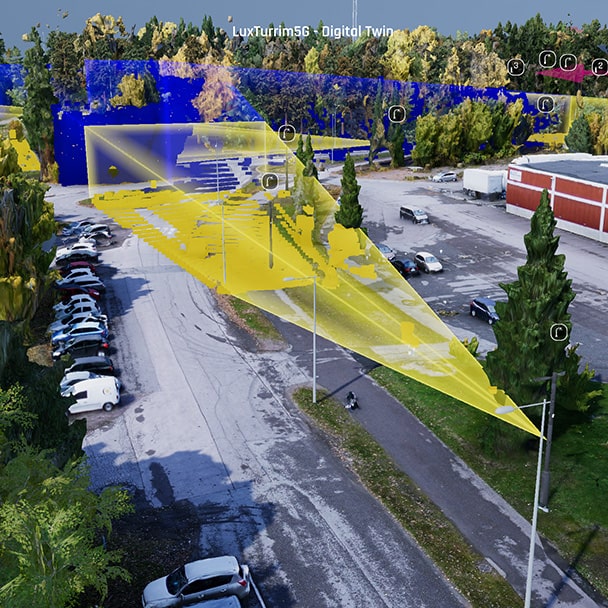
The Nokia Espoo Campus is one of Europe’s most advanced testbeds for smart city innovation. As part of the LuxTurrim5G program, it brings together 5G networks, IoT sensors, mobility services, and next-gen urban infrastructure. To manage this complexity, the consortium required a Digital Twin capable of integrating diverse datasets and supporting high-precision 5G planning at millimeter-wave frequencies.
A complex urban innovation environment required designing and validating next-generation 5G infrastructure in dense, real-world conditions.
The project combined:
At these frequencies, network performance becomes highly sensitive to spatial factors such as buildings, vegetation, and moving objects — making traditional planning approaches insufficient.
The key requirement was to replace costly, iterative field testing with a simulation-driven approach capable of supporting multiple planning scenarios.
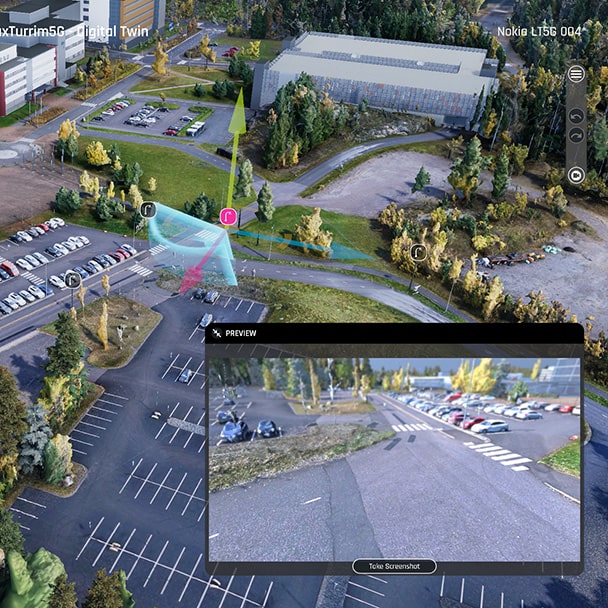
Blare Tech applied a Digital Twin-based, simulation-first methodology to enable accurate infrastructure planning in a complex urban environment.
The solution focused on:
This allowed engineers and planners to analyze network performance directly within a realistic spatial context — before physical deployment.
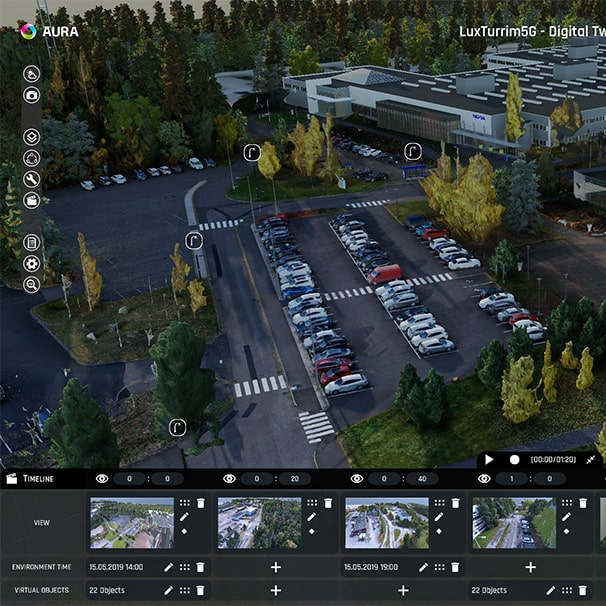
Blare Tech delivered an integrated Digital Twin platform supporting:
The platform created a unified environment for testing and optimizing multiple infrastructure scenarios using real-world spatial data.
© 2022 Blare Technologies. All rights reserved. Cookie Policy